What's in this article?
- In what order should you do your hair care routine?
- Shampoo: target the scalp, not the hair length
- Cream or mask: choosing the second step
- Towel drying and combing: the step people skip
- Leave-in products: lighter first, then oilier
- Does oil go into the routine before shampoo?
- How does this order work with Silver Head products?
- Sample weekly plan by hair type
- If you are short on time, what is the shortest routine?
- What to do on days you don't wash?
- What should you not expect, even if your routine is right?
A hair care routine has four core steps: shampoo, hair conditioner or mask, towel drying, and a leave-in product if needed. Shampoo goes on the scalp, while cream or mask goes on the lengths. Leave-in products like styling water and serum come after showering, and heat tools go last. This order is the same for most hair types; what changes is the amount of product, where you apply it, and how often you wash your hair.
In what order should you do your hair care routine?
The logic of the order is: cleansing first, then rinse-off care, and finally products that stay in the hair. If you apply a care product to dirty hair, you are putting it on top of oil and residue. If you use a product meant to stay in your hair in the shower, the water will wash it away.
| Order | Product | Hair condition | Where | Rinsed off? |
|---|---|---|---|---|
| 1 | Shampoo | Wet | Scalp, foam flows toward the lengths | Yes |
| 2 | Hair conditioner or mask | Cream in the shower, mask on towel-dried hair according to most labels | Lengths and ends, depending on hair type | Yes |
| 3 | Leave-in cream or styling water | Moist | From mid-lengths to ends | No |
| 4 | Serum or oil | Damp or dry, depending on the label | Dry and frizzy areas | No |
| 5 | Heat tool | Depending on the type of tool | Only if needed | None |
Shampoo: target the scalp, not the hair length
The main job of shampoo is to remove oil, dead skin and product residue that build up on the scalp. So apply the product by massaging your scalp, and do not rub the lengths between your palms. The foam that runs down while rinsing is usually enough for the lengths. Rubbing shampoo over all of your hair dries it out unnecessarily and increases friction.
How often you wash depends on how oily your scalp gets. Anyone with straight hair and an oily scalp can wash daily. With dry, curly or thick hair, washing as needed is enough, but you should not go more than 2-3 weeks between washes. When browsing shampoo shelves, you can compare products by hair type on our hair care page.
Cream or mask: choosing the second step
Conditioner comes after every shampoo. It reduces friction, prevents tangling and makes combing easier. On fine or straight hair, apply to the ends only; on dry or curly hair, apply through the whole length. If you apply it to the scalp, the roots may look greasy. A rinse-off conditioner stays in the hair for a short time, about 5 minutes according to dermatology literature; if the product label states a different time, follow that.
The mask is a more intensive rinse-off treatment that sits on the same step. It comes into play when your hair is very dry, tangles easily or has been chemically treated. You don't have to apply both in the same wash; on mask days, you can skip the conditioner.
The one common exception to this step: If your hair is very dry, or you struggle to detangle before shampooing, you can use conditioner before shampooing too. It is especially helpful for curly hair as an intermediate step, but it does not replace the conditioner you use after washing.
Towel drying and combing: the step people skip
Wet hair is more fragile, so the moment you step out of the shower is the easiest place to make a mistake. Wrap your hair in a towel or a cotton T-shirt and let it absorb the water; don't rub. When detangling, use a wide-tooth comb instead of a brush, starting at the ends and working your way up slowly.
Timing depends on your hair structure. With straight hair, let it dry a little before combing. With thick, wavy or curly hair, it is easier to detangle in the shower before rinsing out the conditioner. Combing curly hair when it is dry makes it both frizzy and prone to breakage.
Leave-in products: lighter first, then oilier
This step is not mandatory for everyone. It is most useful for hair that is colored or treated, heat-styled, long, curly or tangles easily. If you use it, these four rules are enough:
- Order: First, a leave-in cream or spray. If your hair still feels dry or frizzy, add a small amount of serum or a plant oil such as argan oil on top.
- Where: On the hair only. Leave-in product applied to the scalp can build up and cause irritation. Spray from the mid-lengths toward the ends, then spread with your fingers.
- Amount: The least amount that will do the job. Thick hair needs a bit more, while on fine hair too much looks greasy.
- Duration: Leave-in product should stay in the hair for a week at most, then remove it with shampoo and water.
Don't dilute the conditioner you use in the shower with water to make a spray. Rinse-off conditioners are not formulated to stay in the hair, and their cleansing ingredients can cause damage if left on the hair.
If you use a blow dryer, flat iron or curling iron, this step comes at the end of your routine. You can find the temperature to use, how wet or dry your hair should be, and how often to use heat in our heat protectant guide.
Does oil go into the routine before shampoo?
This step is optional and not for everyone. For dry, thick or tightly curled hair, you can use argan or coconut oil once a week, before shampooing. The method is simple: Comb your hair to loosen knots, spread a pea-sized amount of oil over dry hair from mid-lengths to ends, leave it on for 20 minutes to 1 hours, then wash as usual.
This treatment can weigh down fine, straight hair. If you are prone to dandruff, stay away from oil. Do not apply oil to the scalp, as it is said to increase the risk of seborrheic dermatitis. Even if you use this step, the order does not change: oil is added before shampoo, and then everything continues in the same way.
How does this order work with Silver Head products?
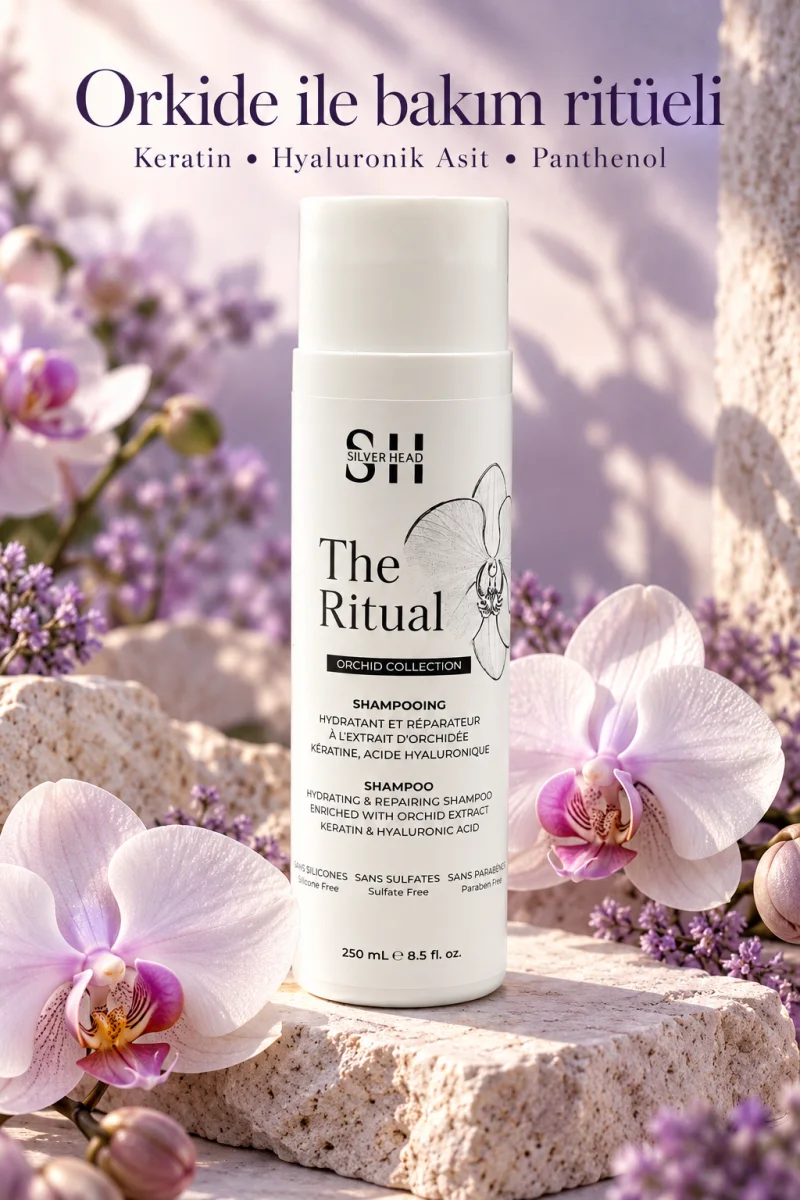
If you own Silver Head products, the table below matches how each one is used on its label to its place in the routine. You don't need to use all four; the basic routine consists of a shampoo and a rinse-off conditioner, and the rest is added as needed.
| Step | Product | Usage instructions on the label |
|---|---|---|
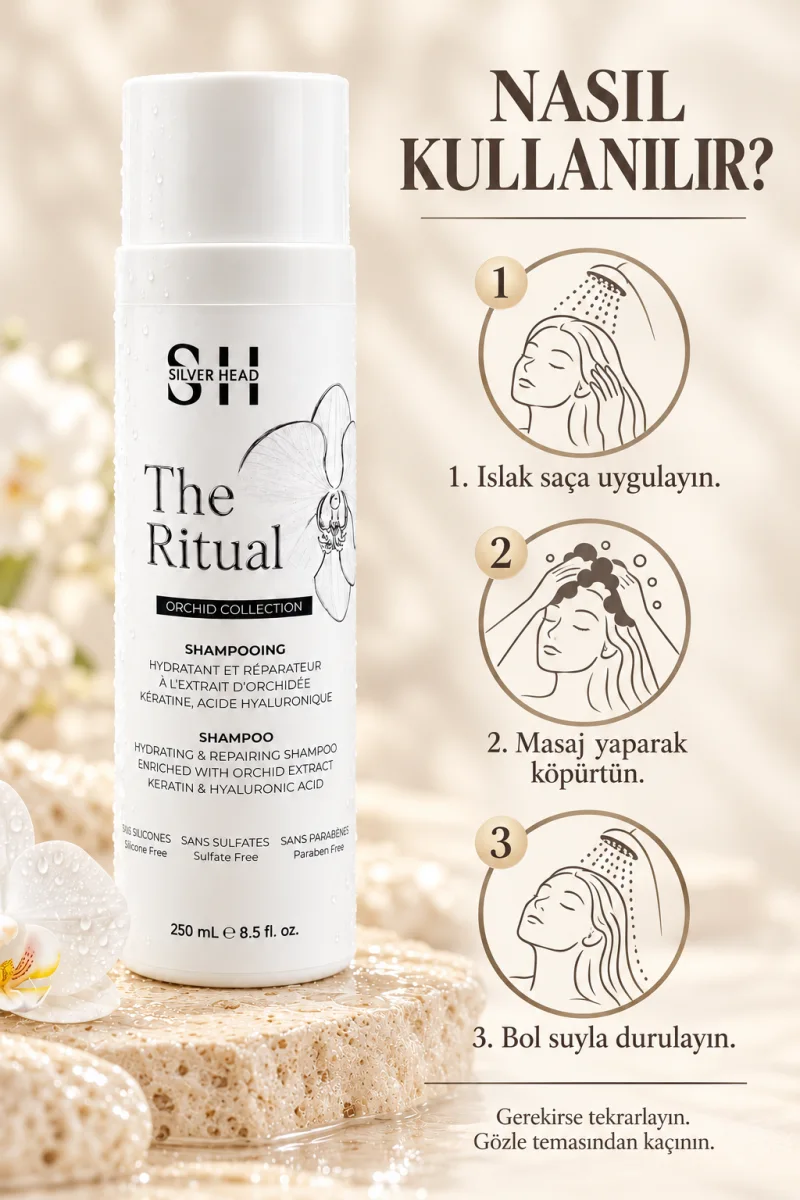
| Shampoo | Silver Head The Ritual | Apply to wet hair, massage into the scalp to lather, and rinse thoroughly with plenty of water. Repeat if needed. Avoid contact with eyes. |
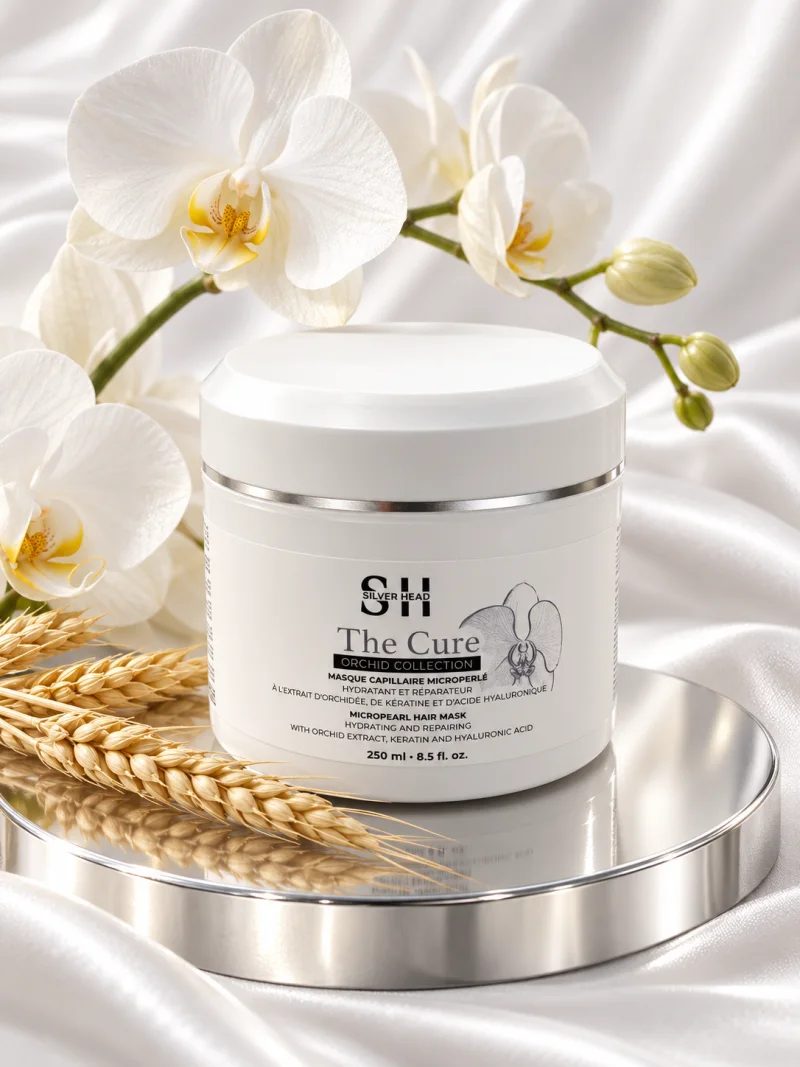
| Rinse-off care | Silver Head The Cure | Apply from roots to ends on washed, towel-dried hair, leave on for 5-10 minutes, and rinse thoroughly with plenty of water. |
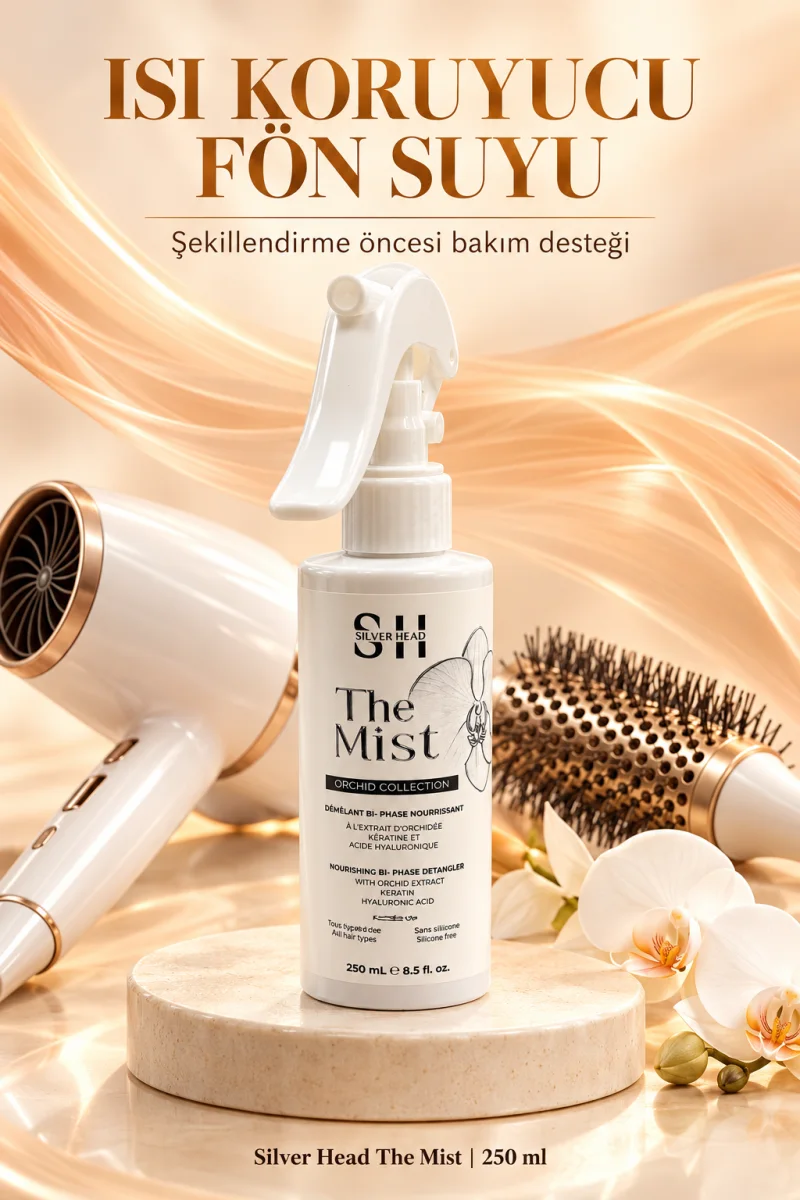
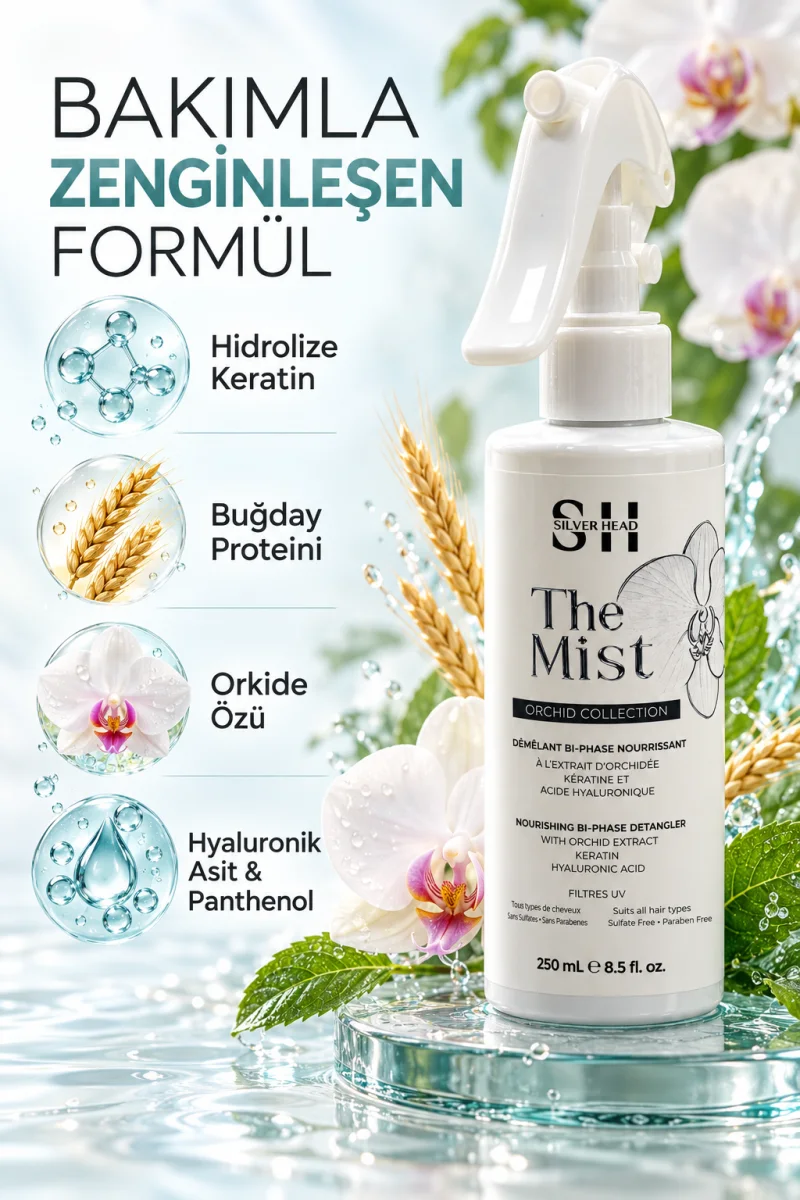
| Blow-dry spray | Silver Head The Mist | Spray onto clean, damp or dry hair from about 20 cm away, comb through if needed to distribute, and leave in. Don't spray toward the face, and avoid contact with the eyes and mucous membranes. |
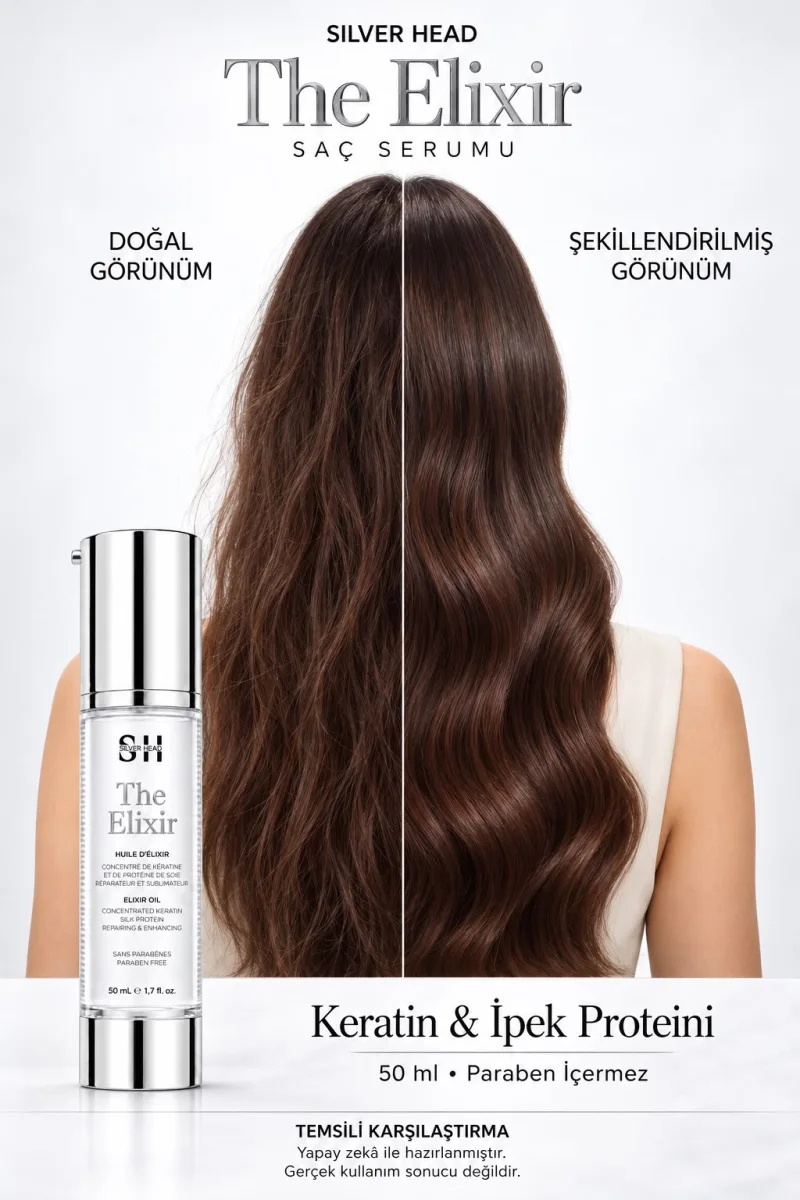
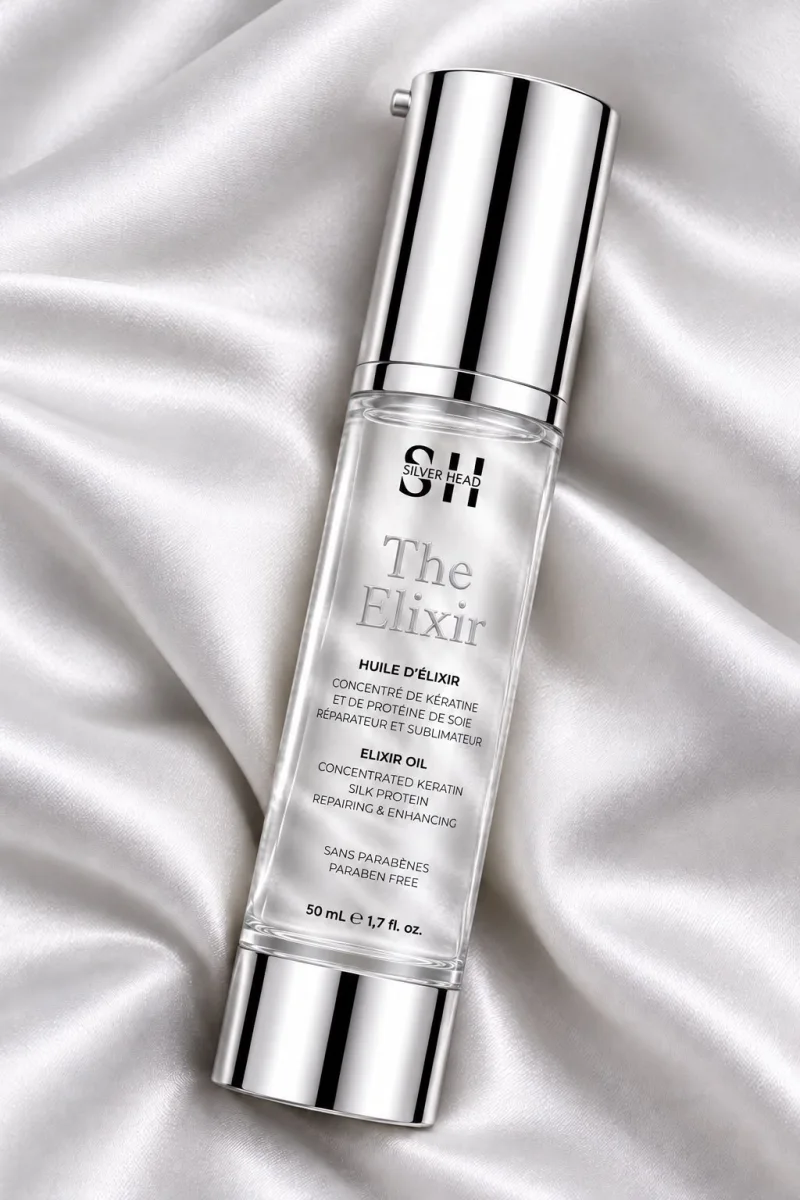
| Serum | Silver Head The Elixir | Take the amount you need, spread it from roots to ends over towel-dried hair, and leave it in without rinsing. |
The label on the mask and serum says "from roots to ends." Following the general rule above, it is better to spread the product over the strands rather than massaging it into the scalp. If your scalp gets oily quickly, starting a little away from the roots is also an option.
Sample weekly plan by hair type
The table below is not a prescription but a starting point. Washing intervals are taken from general recommendations. There is no agreed-upon number for mask frequency; the values there are derived as examples. If your hair gets heavy, use it less often; if it stays dry, use it more often.
| Hair | Washing frequency | Cream | Mask (sample) | Product left in hair |
|---|---|---|---|---|
| Fine, straight, oily scalp | Every day or every 1-2 days | Every wash, ends only | As needed, 2 time a week, ends only | Very little or none |
| Medium thickness, normal | Once every 2-4 days | Every wash, lengths and ends | Once a week or less often | Small amount on tangled areas |
| Thick, dry | Once a week or as needed | Every wash, whole length | Once a week | Leave-in cream, serum on top if needed |
| Curly, tight curls | As needed, at least 2 time a week | Every wash, all over the hair; before shampooing too if very dry | Once a week or based on your washing frequency | Leave-in cream or oil |
| Colored or chemically treated | Based on scalp type | After every shampoo | Once a week | Leave-in cream |
If you are short on time, what is the shortest routine?
Two steps: shampoo for the scalp, conditioner or leave-in for the ends. If you add towel-drying after the shower instead of rubbing, the core of your routine is complete. Masks, serums and blow-dry lotions are added to this core for a specific concern; they are not inherently necessary. Also, don't add a new product together with the others; add it on its own. That way, if something changes in your hair, you can tell which product caused it.
What to do on days you don't wash?
Your routine is not just about showering; habits between washes also affect the condition of your hair.
- Dry shampoo: It absorbs oil and makes hair look cleaner, but it does not clean it. After one or two uses, wash your hair with shampoo and water. Relying only on dry shampoo can increase the risk of itchy, flaky scalp irritation.
- Clarifying shampoo: If you use gel, spray or pomade, a clarifying shampoo once or twice a month helps remove buildup. It is not necessary with every wash.
- Styling: Gather your hair loosely and use a coated elastic. Tight ponytails and buns put stress on the roots.
- Sleep: If your hair is curly, a loose braid or a loose ponytail on top of your head before bed reduces tangling.
What should you not expect, even if your routine is right?
- Reattaching a split end. Protein treatments can temporarily smooth split ends, but a broken strand does not return to its original state. The way to get rid of split ends is to cut them.
- Repairing damage from coloring or straightening. Care treatments soften the look of hair and make it easier to comb. To avoid making damage worse, leave longer gaps between treatments and do only one chemical process at a time.
- More product does not mean better results. The more product left in your hair, the more buildup there is. If your hair has become heavy and dull, reduce the amount of product first.
If your hair keeps breaking despite changing your habits, if you notice clear thinning or hair loss, or if you have an itchy, flaky scalp that does not go away, see a dermatologist. Many causes of hair loss can be treated, and seeking help early works.
This routine is for general information on healthy hair and scalp; if you have sores, itching or hair loss, consult your dermatologist before adding any new product.