What Is Blow-Dry Spray, What Does It Contain? Difference from Hair Spray and Heat Protectant
Other names: blow dry spray, blow dry lotion
Blow-dry spray is a leave-in, water-based care spray applied to damp or dry hair before blow-drying. It mostly contains cationic polymers, humectants and a small amount of oil or silicone; its purpose is to reduce tangling and make blow-drying easier. Not every blow-dry spray is a heat protectant, and it is not a hair spray that holds shape.
See products for youAt a glance
- Type
- Leave-in, water-based care spray
- Typical content
- Water, Polyquaternium-7, Glycerin, Panthenol, hydrolyzed protein
- What it does
- Makes combing and blow-drying easier, helps reduce puffiness
- Use
- Sprayed on clean hair before blow-drying, not rinsed off
- Concept often confused
- Hair spray sets shape, heat protectant is aimed at heat damage
What's on this page?
"Blow-dry spray" is not a scientific term; it is a name used by the market. Its closest equivalent in dermatology literature is blow-drying lotion: a product resembling a rinse-off conditioner, but prepared to remain on the hair, and described especially for fine hair that becomes greasy quickly at the roots. That definition describes oil-free formulas. Blow-dry sprays on the market may also contain mineral oil or silicone, so each bottle has to be read separately.
What is inside a blow-dry spray?
- Water: It is at the top of the list and explains why the product feels light. It is also the most obvious difference from a serum.
- Cationic polymers: Names such as Polyquaternium-7 or Guar Hydroxypropyltrimonium Chloride. Being positively charged, they attach to the negatively charged hair surface and reduce static and friction between strands.
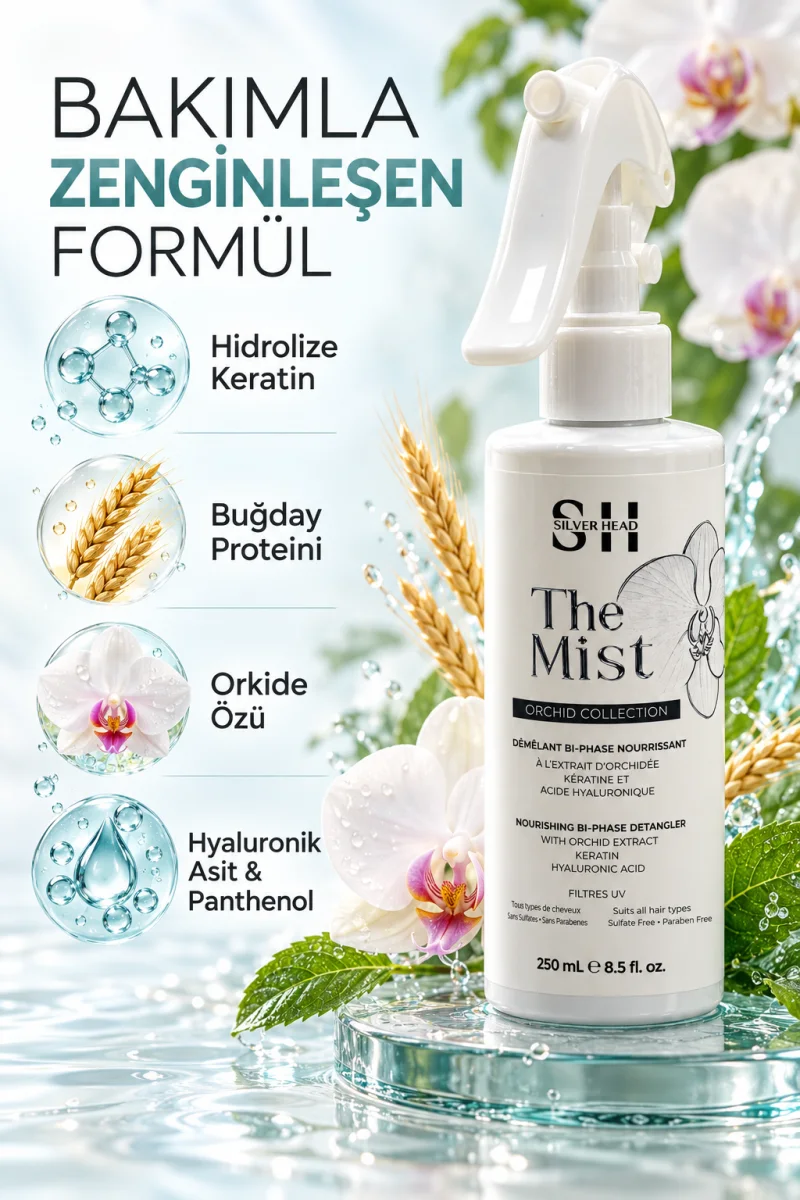
- Hydrolyzed proteins: Such as Hydrolyzed Keratin, Hydrolyzed Wheat Protein. They adhere to the strand, small pieces can move inward, and their effects are temporary.
- Humectants: Glycerin, Panthenol, Sodium Hyaluronate. They leave a soft feel.
- Oil or silicone: Paraffinum Liquidum, Dimethicone. When present, they increase slipperiness and may add weight on fine hair.
- Solubiliser and preservatives: PEG-40 Hydrogenated Castor Oil keeps oily ingredients dispersed in water, and preservatives such as Sodium Benzoate prevent spoilage of a water-containing formula.
The difference between blow-dry spray, hair spray and heat protectant
All three can be sold in spray bottles, so they are easily confused. Yet they are used at different times and for different purposes.
| Feature | Blow-dry spray | Hair spray | Heat protectant |
|---|---|---|---|
| Main purpose | Reduce tangling, make blow-drying easier | Hold the shape that has been given | Reduce heat damage |
| When? | Before blow-drying, on damp or dry hair depending on the label | After styling is finished, on dry hair | Before a heated tool |
| Core ingredients | Water, cationic polymer, humectant | Holding polymer, alcohol, sometimes a propellant | Film-forming polymer, silicone |
| Feel left on the hair | Light, not stiff | Flexible or firm hold | Varies by product |
| Heat data | Depends on the product, often none | Not made for this purpose | Hair swatch experiments exist |
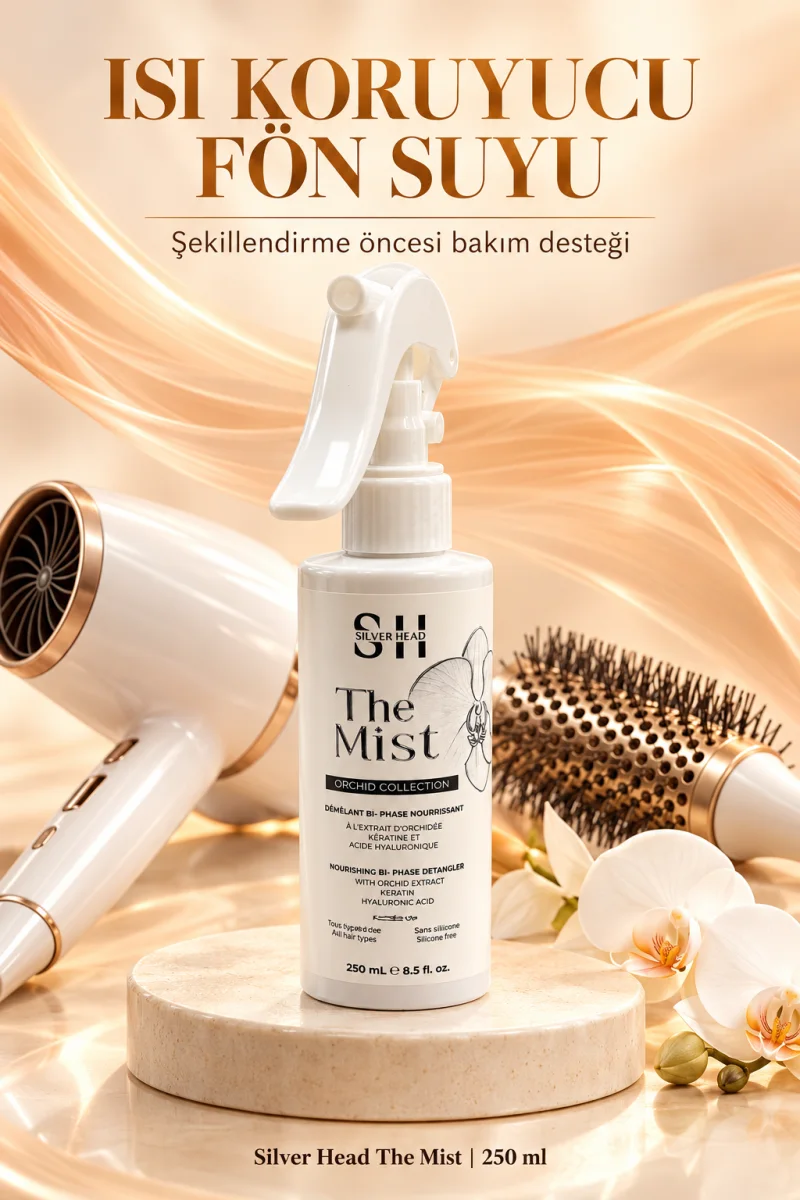
Blow-dry sprays may carry a heat protection phrase in their name. This phrase alone does not show the product's effect against heat. Check the label for temperature information and whether the ingredients include polymers or silicones linked to this function. You can find which substances are backed by how much data on the heat protectant page.
Water-based product and heat: no problem with blow-drying, a problem with straighteners
Blow-dry spray works on damp hair, because blow-drying relies on shaping the hair while it is still wet. Holding the strand taut until it dries sets it in its new position. You can read about this part and the technique in the how to blow-dry hair article. Keeping the dryer about 15 cm from the hair and moving it constantly is also a precaution that does not depend on the product.
With a straightener or curling iron the situation is different. In a lab, hair dampened with a water-based spray showed more structural damage under a straightener than dry hair. So if you have used a blow-dry spray, the hair must be completely dry before moving on to a plate.
Can blow-dry spray replace hair conditioner?
No. Hair conditioner is the core care step applied to the whole strand in the shower, while blow-dry spray is a light addition on top of it. On fine hair, leaning on blow-dry spray instead of conditioner may sometimes be enough, but on dry or easily tangled hair there is no reason to skip the conditioner. If you use several products, the order is simple: shampoo and conditioner, squeeze out the water with a towel, blow-dry spray, blow-dry, and if needed a little serum on the ends at the very end.
Which hair does it work for, and how far?
- Fine hair that gets greasy quickly at the roots: A sensible option, since it is lighter than cream. Still, start away from the roots.
- Normal hair: Helpful on long hair that is hard to comb; not essential.
- Thick, very dry or curly hair: May not be enough on its own. A richer leave-in care product may make a bigger difference.
Application is simple: on clean hair squeezed dry with a towel, spray from the distance stated on the label, spread with a comb if needed, and blow-dry. Do not spray toward the face; avoid contact with the eyes and mucous membranes. There is no need to rinse.
From blow-dry spray, expect easier combing and a softer feel. Do not expect split ends to close or the hair structure to repair. If you add product daily, wash regularly with shampoo, since whatever is left on the hair stays there until the next wash.
This page is for general information only and does not replace medical diagnosis or treatment. If you have an ongoing skin or scalp problem, consult a dermatologist.