What Is Leave-In Hair Care, How Is It Used?
Other names: leave-in, leave-in conditioner, leave-in cream, leave-in hair cream
Leave-in hair care covers cream, spray or lotion products applied to hair after washing and left on until the next wash. They are prepared with ratios suited to staying on the hair, and aim to reduce tangling throughout the day. They may help dry, thick, long or curly hair; they can weigh down fine, quickly greasy hair.
See products for youAt a glance
- Type
- Cream, spray or lotion left on the hair
- Typical content
- Water, cationic substances, fatty alcohols, light silicones
- Suited to
- Dry, thick, long, curly or easily tangled hair
- Use
- A small amount on damp hair after washing, starting from the ends
- Caution
- Do not apply to the scalp; clean at least once a week with shampoo
What's on this page?
What separates leave-in products is how long they stay on the hair. A rinse-off cream is removed with water after a few minutes, while a leave-in product remains on the strand until the next wash. This single difference changes both the formula and the effect on the hair: it is prepared with ratios suited to staying on the hair, works throughout the day, and too much makes the hair heavy.
Why is the formula different from hair conditioner?
If a product is going to stay on the hair, its contact time with the ingredients is also longer. For this reason the European Union sets two different limits on the core substances of hair conditioners:
| Ingredient | Highest allowed in a rinse-off hair product | Highest allowed in a leave-in hair product |
|---|---|---|
| Cetrimonium Chloride and Steartrimonium Chloride (combined) | %2,5 | %1 |
| Behentrimonium Chloride | %5 | %3 |
So diluting the cream you use in the shower and leaving it on the hair is not the same thing. A rinse-off product is not formulated to stay on the hair. If the label does not say it can be left on, do not leave it on.
The same logic applies to scent allergens. In the EU, the threshold above which a scent allergen must be separately listed on the label is 0,001% in leave-on products and 0,01% in rinse-off products. For leave-on products the threshold is ten times lower, because contact is longer. If you have a scent allergy, read the list more carefully for leave-on products.
The difference between hair conditioner, leave-in care and serum
| Feature | Hair conditioner | Leave-in care | Hair serum |
|---|---|---|---|
| Texture | Cream | Light cream, spray or lotion | Fluid, like oil |
| Main ingredient | Cationic substance, fatty alcohol | Water, cationic substance, light oil or silicone | Silicone or oil |
| When? | In the shower, after shampoo | After showering, on damp hair | On damp or dry hair, final step |
| Does it stay on the hair? | No | Yes | Yes |
| Where it is strong | Wet combing after washing | Reducing tangling throughout the day too | Puffiness and glossy look |
| Does it replace one of the others? | It is the basic step in the shower | Added alongside the cream; does not replace it | An addition to cream or to a leave-in product |
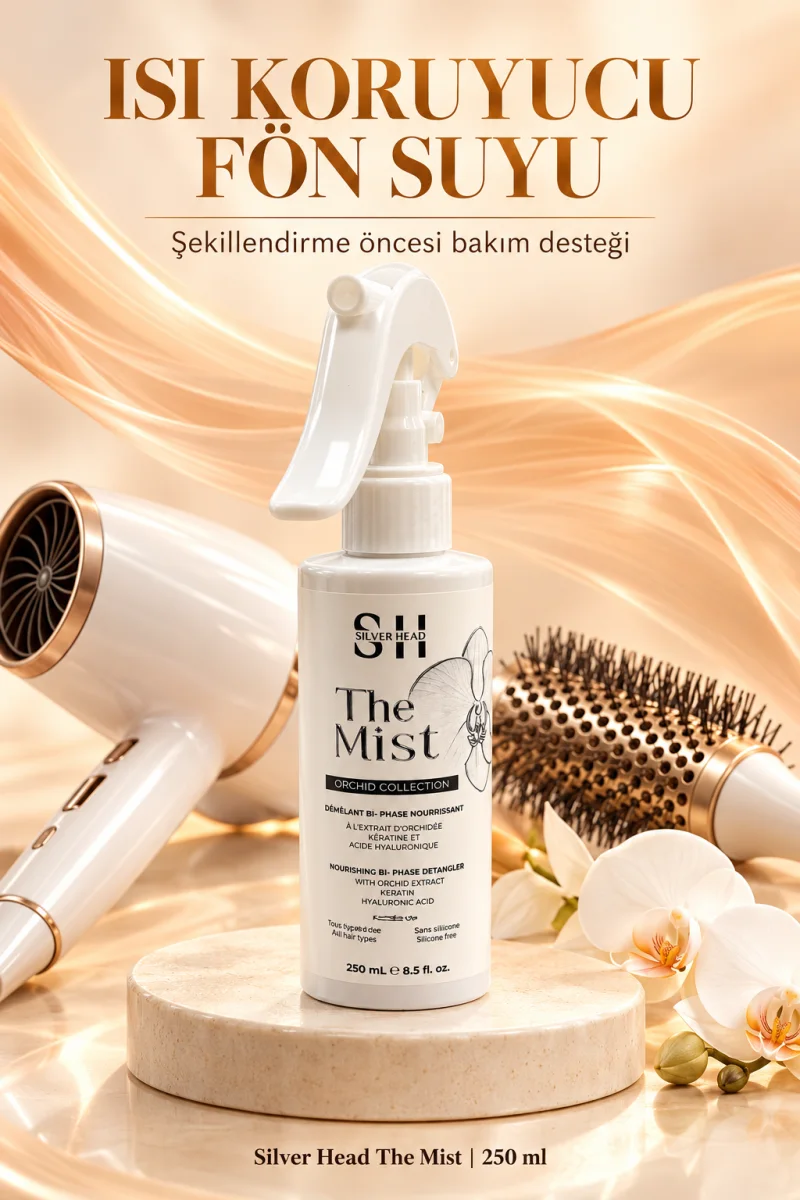
Blow-dry spray technically also falls into this group, but it is lighter and is intended for use before blow-drying.
Which hair is it preferred for?
- Dry, easily tangled, long hair: The most meaningful option for reducing breakage during combing.
- Curly and tightly coiled hair: Because oil struggles to reach the ends, a leave-in product is often effective. On this hair, the product is distributed in sections.
- Dyed, processed or frequently heat-styled hair: Because the surface is rougher, the slipperiness it adds is more noticeable.
- Fine, straight hair that gets greasy quickly at the roots: Be careful. These hairs struggle to carry the product, and it can look flat and greasy. If you want to try, an oil-free spray formula, or just a little cream on the ends, makes more sense.
- Oily scalp: Keep the product on the lengths. If it reaches the scalp, it can build up and irritate it.
For details by hair type, you can look at the dry hair care article.
How to use
- Finish with shampoo and hair conditioner, then move on to hair squeezed dry with a towel.
- Use a small amount. Start with the amount on the label and increase it according to hair type.
- Start at the ends. Cover the most worn area first, then spread what is left in your palm over the mid-lengths.
- Comb and distribute. A wide-toothed comb works well; do not let it touch the scalp.
- Do not rinse; let it dry. Then you can move on to blow-drying or styling.
Product left on the hair builds up. For this reason, leave-in product should not stay on the hair for more than a week; clean it with shampoo within that time at the latest. Skipping one wash and comparing results is an easy way to tell whether it actually works for you.
Common mistakes with leave-in products
- Dropping hair conditioner altogether. A leave-in product does not replace the shower step that makes wet combing easier. Think of them together.
- Rubbing it into the scalp. If you notice greasiness or itching, first move the application point away from the root, then reduce the amount.
- Adding to it every day. If yesterday's product is still on the strand, a new layer adds more weight than benefit. If the hair feels heavy, wash it first.
- Assuming it is a heat protectant. If the label gives no information about heat, do not think of the product as protection against blow-drying or straighteners.
If you have had a reaction on the scalp, try a new product first on the inner arm or elbow crease, twice a day, for 7-10 days. If itching or a rash does not go away, see a dermatologist.
This page is for general information only and does not replace medical diagnosis or treatment. If you have an ongoing skin or scalp problem, consult a dermatologist.