What's in this article?
- Before you start: Is retinol right for you?
- How to use retinol? Step by step for your first night
- Sample schedule for the first 12 weeks
- Does the sandwich method really work?
- Which side effects are normal, and which are a stop sign?
- The difference between retinol, retinal and prescription retinoids
- How does it fit into your routine with other actives?
- Pregnancy and breastfeeding: Why is it not used?
- When will you see results?
- Most common mistakes
How to use retinol: In the evening, on clean, dry skin, a pea-sized amount, starting with two nights a week. After washing your face, wait 20-30 minutes, apply a thin layer, then apply a moisturizer over it, and in the morning use a broad-spectrum sunscreen with at least SPF 30. Increase the frequency as your skin adjusts. If you are pregnant, planning a pregnancy or breastfeeding, retinoids are not used; talk to your doctor.
Before you start: Is retinol right for you?
Retinol is a form of vitamin A. It speeds up cell renewal, helps reduce the buildup that clogs pores, and may support collagen over time. It is considered a reasonable option for mild acne, mild discoloration and fine lines. But it is not the first choice for every skin type.
| Your condition | What should you do? |
|---|---|
| Pregnancy, planning a pregnancy, breastfeeding | Use only as directed by your doctor |
| Sunburn, open wounds, irritated skin | Don't apply until your skin has recovered |
| Noticeable dryness or frequent skin allergy | You may not be a suitable candidate; fix your skin barrier first and ask your dermatologist |
| Intense redness, suspected rosacea | Don't start on your own; other options may be more suitable |
| Moderate or severe acne, noticeable scarring, acne that worsens with your period | See a dermatologist first, then choose your product |
| Eczema | Drying effect may worsen the condition, ask your doctor |
If you're unsure of your skin type, a skin analysis is a good start. You can also check the ingredient page for the basic features of retinol.
How to use retinol? Step by step for your first night
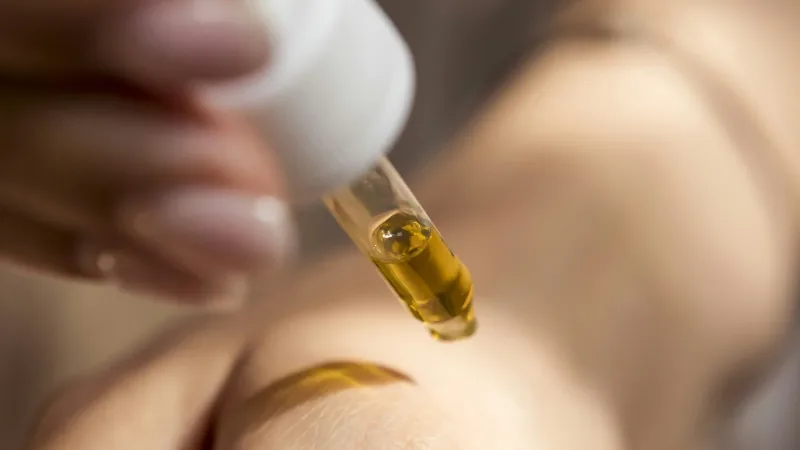
- Test on your arm first. Apply the new product on the inner arm or elbow crease, twice a day, for 7-10 days. If redness, itching or swelling occurs, don't use it. This test is meant to catch allergies; it does not fully show the dryness that may appear on the face in the first weeks.
- Gently wash your face. Pat dry without rubbing. For cleanser selection and water temperature, check out the face washing guide.
- Wait 20-30 minutes. Retinoid applied to damp skin can increase irritation. If you plan it as one of the last things you do before bed, the wait happens naturally.
- Take a pea-sized amount. Spread it thinly on your fingertip, then apply it to your cheeks and chin. More does not give faster results, it only causes more irritation.
- Stay away from sensitive areas. The eye area, mouth corners and nostril wings are easily irritated.
- Apply a moisturizer. Choose a product that doesn't clog pores.
- Apply sunscreen in the morning. Retinol increases sun sensitivity. Reapply a broad-spectrum sunscreen with at least SPF 30 every 2 hours and after sweating or swimming. The amount and technique are explained in the applying sunscreen article.
Sample schedule for the first 12 weeks
There is no single schedule for starting frequency that everyone agrees on. Recommended numbers range from one or two nights a week to every other day. The table below is a starting point derived from the cautious end of this range, not a tested protocol.
| Period | Frequency | Condition to move on |
|---|---|---|
| Weeks 1-2 | 2 nights a week | Continue if there is no constant stinging or peeling |
| Weeks 3-4 | 2-3 nights a week | If your moisturizer doesn't sting, increase it |
| Weeks 5-8 | Every other day | Stay constant if your skin tolerates it |
| Weeks 9-12 | Use more often if you like | Not necessary every night; the frequency your skin tolerates is enough |
The rule for going back is simple: if peeling, stinging or burning increases, pause for a few nights, then return to your previous frequency. Increasing frequency too early is the mistake that slows the process down the most, because once your skin gets irritated you have to start over.
Does the sandwich method really work?
In the sandwich method, retinol is placed between layers of moisturizer. There are two types: the "open sandwich", where the moisturizer is applied only before or only after the retinol, and the "full sandwich", where it is applied both before and after. Although it is widely discussed on social media, the data is weaker than expected.
- Effect side: In a laboratory study using human skin samples, an open sandwich did not reduce the biological activity of the retinoid, while a full sandwich reduced it by about 3 times. However, the study used tissue from a single donor, lasted 48 hours, was supported by the manufacturer, and was presented as a congress poster. We don't know whether the same difference will occur in real-world use.
- Irritation side: The same study did not measure irritation. There is clinical data showing that a moisturizer makes the retinoid period easier: in a matched, double-blind study on sun-damaged skin, a barrier-supporting moisturizer started before tretinoin and continued throughout eased the initial period. But there is no clinical study that directly compares whether the moisturizer should be applied before or after.
The practical takeaway: on normal skin, a moisturizer after retinol is enough. If your skin is dry, as in the routine order article, apply a light moisturizer first, then wait 20-30 minutes before using retinol. Think of the full sandwich method as a transition step for a few weeks on dry and sensitive skin. Keep in mind that it may reduce its effect.
Which side effects are normal, and which are a stop sign?
In the first few weeks, mild dryness, peeling and redness are common and usually decrease as your skin adjusts. In a long-term comparative study, retinol caused significantly less irritation than prescription retinoic acid, where the most intense period with retinoic acid was the first four weeks.
| Sign | Meaning | What to do? |
|---|---|---|
| Mild dryness, fine flaking | Expected adjustment period | Increase the moisturizer, keep the frequency constant |
| Stinging and tightness with every product | Frequency is too much | Pause for a few nights, then return to your previous frequency |
| Short-term increase in small pimples | It may appear in the first weeks, and the skin may look worse at first | Don't increase the frequency; if it persists, ask your doctor |
| Easily sunburned | Increased sun sensitivity | Tighten up your sun protection |
| Darkening areas on darker skin tones | May be a spot left by irritation | Reduce the frequency and see your dermatologist |
| Swelling, blisters, intense burning, widespread rash | A serious reaction can occur | Stop the product and see your doctor |
The difference between retinol, retinal and prescription retinoids
"Retinoid" is the general name for all vitamin A derivatives. Retinol converts to the active form, retinoic acid, in the skin in two steps. That's why it is gentler but slower than prescription retinoids.
- Retinyl palmitate and retinyl acetate: Ester forms of retinol. You'll see them on labels, and they are also included in the European upper limit calculation.
- Retinol: Used in cosmetic products. Concentrations reported in products have ranged between %0,0015 and %0,3.
- Retinaldehyde (retinal): It is one conversion step closer, and a comparison shows it is as low in irritation as retinol.
- Adapalene: A retinoid sold without prescription in some countries and used for acne. Sales conditions vary by country.
- Tretinoin, tazarotene, trifarotene: These are in the drug class. Your doctor determines the strength and frequency of use; the schedule here does not apply to these products.
Listing the percentage on the label is not required everywhere. If you can't see a percentage, start with the lowest-strength product you can find. Under the European regulation, the upper limit for face products is %0,3 retinol equivalent, and for body lotions it is %0,05 retinol equivalent. These products are also required to carry a warning that they contain vitamin A and that daily intake should be taken into account.
How does it fit into your routine with other actives?
- Vitamin C: Vitamin C in the morning and retinol at night is the easiest solution. Add new products a few weeks apart rather than at the same time.
- Glycolic and salicylic acid: Don't combine them on the same night. Separate them onto different days or into morning and evening. If you're just starting, don't add them in the first few weeks.
- Peeling: Not done on the same night.
- Niacinamide and hyaluronic acid: May help balance the dryness of retinol. This is a supportive suggestion, and the evidence is limited.
- Multiple retinol products: You only need one retinol product at a time. If both an eye cream and a serum contain retinol, drop one of them.
Pregnancy and breastfeeding: Why is it not used?
It is clear that retinoids taken orally can cause birth defects. Absorption of products applied to the skin is low, and a large northern European study found no increase in the risk of birth defects. Even so, researchers note that this result may underestimate the risk, and the evidence is not conclusive. That's why a cautious approach applies: retinoids are not used during pregnancy and breastfeeding, and you should consult your doctor.
- If you've just found out you're pregnant: Stop using the product and tell your doctor at your first visit. Don't panic: the amount that passes into the body from products applied to the skin is considered low.
- If you are planning a pregnancy: Talk to your doctor about when to stop.
- If you are looking for alternatives: Instead of switching to a product sold on its own as "natural retinol", ask your doctor which option is right for you.
When will you see results?
Most anti-aging products need at least 6 weeks to work, and visible changes in wrinkles usually take a few months. Improvement in acne can also take several months. In an analysis combining six studies on %0,1 retinol (237 retinol users, 234 placebo users), differences in signs of sun damage appeared from week 4 and lasted until week 12. You should also know that this analysis was manufacturer-supported and only covered women with mild to moderate sun damage.
What not to expect: deep wrinkles won't be erased, sagging won't be lifted, and pores won't shrink. If you don't see any change after a few months of regular use, see your dermatologist and talk about whether prescription options are suitable for you.
Most common mistakes
- Using it every night from the first week. If your skin gets irritated, you'll set yourself back for weeks instead of speeding up.
- Using too much product. A pea-sized amount is enough for the whole face.
- Apply right after washing. Damp skin can increase stinging, so keep an interval of 20-30 minutes.
- Skipping sunscreen. It applies on cloudy days and in winter too; sunburn happens more easily when using retinol.
- Mistaking peeling for effectiveness. Flaking is not a measure of the product working; it can be a sign that you're using it too often.
- Giving up after a few weeks. Skin may look worse in the first weeks. If there is no serious irritation, 12 weeks is a reasonable starting point for deciding.
This explanation of retinol use is for general information only; if pregnancy, breastfeeding or prescription retinoids are involved, the decision is up to your doctor.