What Is Hair Serum, What Does It Do? Silicone and Oil-Based Types
Other names: hair care serum
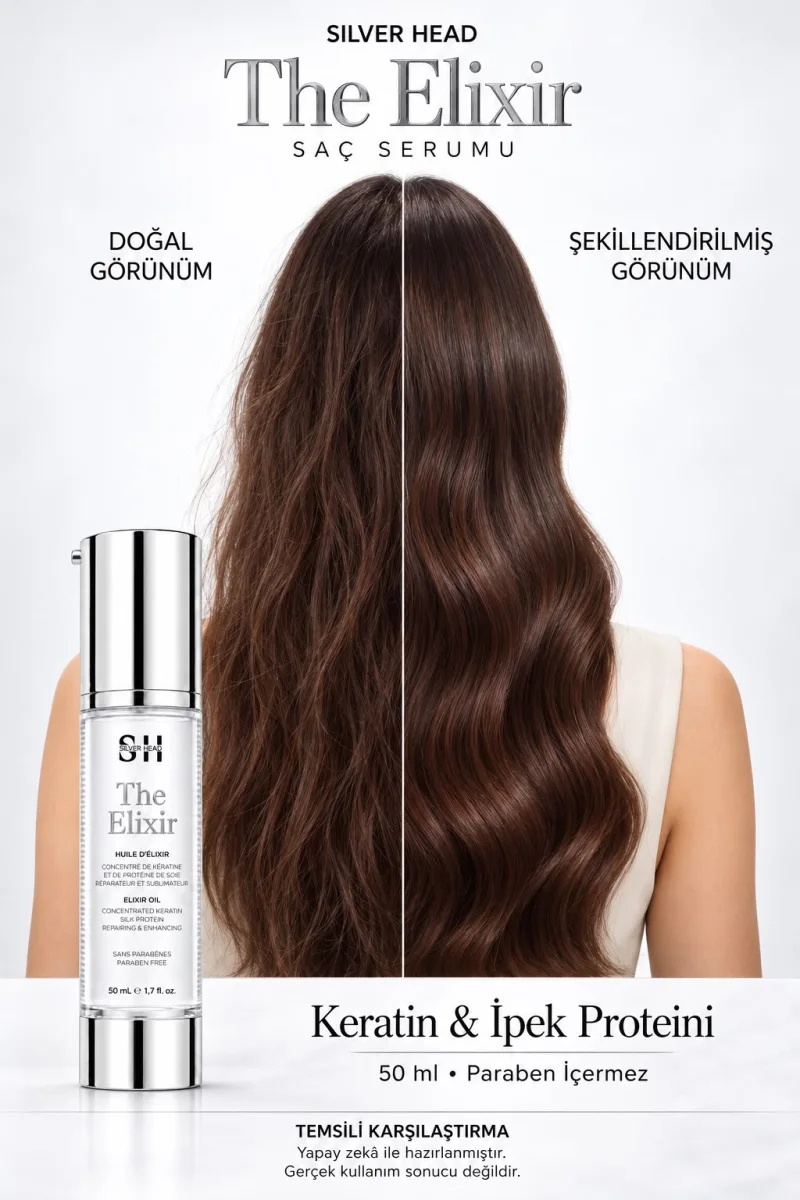
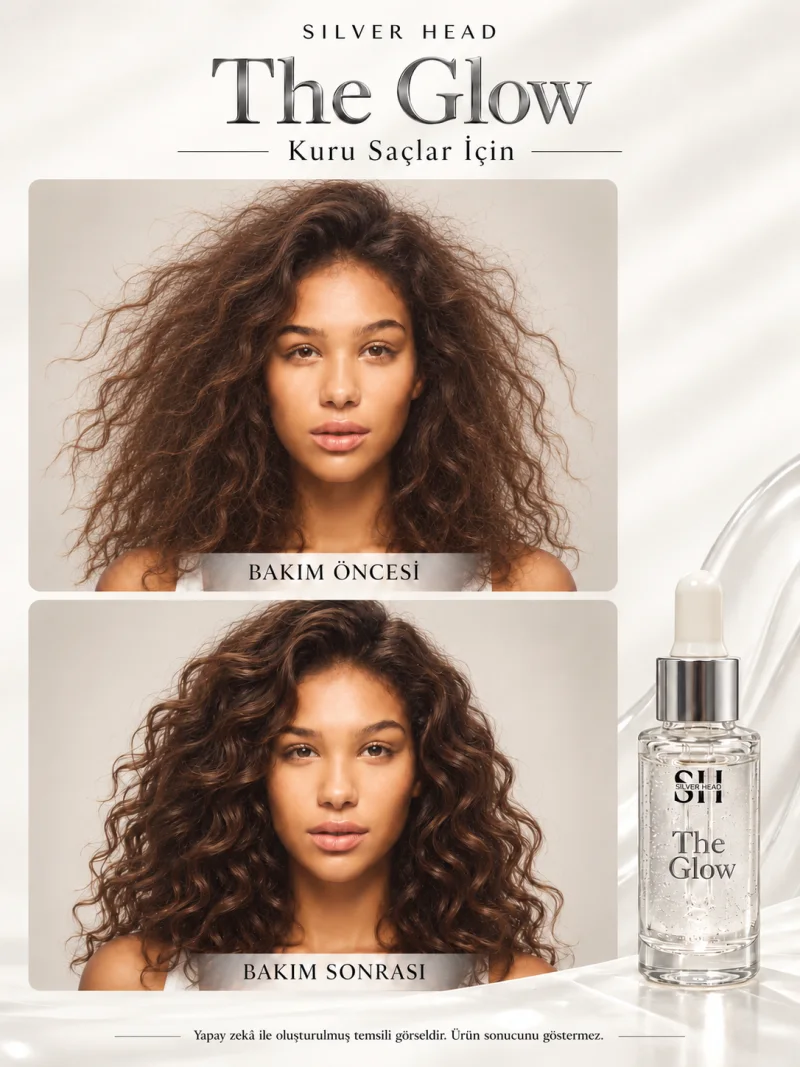
Hair serum is a leave-in liquid care product that leaves a thin film on the surface of the hair and is used in very small amounts. Silicone-based ones aim to reduce friction and puffiness; oil-based ones help soften the surface. The effect is superficial and fades with washing: it does not close broken ends or renew the inside of the strand.
See products for youAt a glance
- Type
- Leave-in liquid care product used in small amounts
- Typical content
- Cyclopentasiloxane, Dimethicone, Dimethiconol, plant oils
- What it does
- Reduces friction and puffiness, helps shine
- Suited to
- Thick, long, dry or easily tangled hair
- Caution
- Do not apply to the scalp; does not close split ends
What's on this page?
Although the name is the same, the logic of a facial serum and a hair serum differs. A facial serum is prepared to carry an active ingredient into the skin. Most hair serums do not try to carry anything into the strand; they leave a slippery, even layer on the surface. That is why their consistency resembles oil, a few drops are enough, and the effect lasts until it is washed out.
How do you tell silicone-based and oil-based serums apart?
You can tell the product type from the first rows of the ingredient list, not from the name. Many serums on the market are a mix of the two: a silicone base with a little plant oil.
| Feature | Silicone-based | Oil-based |
|---|---|---|
| At the top of the label | Cyclopentasiloxane, Dimethicone, Dimethiconol | Plant oils, Caprylic/Capric Triglyceride, Paraffinum Liquidum |
| Behaviour on the strand | The volatile part evaporates; the silicone that remains forms a film on the surface | Varies by oil; some enter the strand, others stay on the surface |
| Main effect | Slipperiness, less puffiness, glossy look | Soft feel; with some oils, reduced protein loss during washing |
| Texture | Dry and silky glide | A more oily feel |
| Drawback | Too much adds weight, especially on fine strands | Oily look; caution on a scalp prone to dandruff |
Oils also differ among themselves. In a lab study comparing three oils, only coconut oil markedly reduced protein loss in hair; mineral oil and sunflower oil did not. The authors attributed the difference to coconut oil's ability to enter the strand. This experiment was done before and after washing; it does not show that a few drops applied to the ends give the same effect.
There is also a third group: serums containing water. Alongside Aqua, you will see a thickener such as Carbomer and a preservative such as Sodium Benzoate. The texture may be lighter, but the film-forming part is still silicone or oil.
The question of silicone buildup and safety is a separate topic; details are in the article does silicone harm hair.
What does coating the surface of the strand mean?
The outside of the strand is covered with overlapping cuticle scales. As the scales wear and lift, the surface becomes rough, strands catch on each other, and light is scattered unevenly. The three things a serum does relate to this condition:
- Reduces friction. The film makes the contact surface between strands slippery. Combing gets easier and there is less opportunity for mechanical breakage.
- Aligns the strands. Strands that lie side by side without sticking look more compact, so puffiness also appears reduced.
- Regulates light reflection. In an older industry study, visible shine was expected to increase as the refractive index of the coating approached that of the cuticle. Dimethicone's value is about 1,40, Phenyl Trimethicone's about 1,46. Dimethicone's contribution to shine comes more from arranging the strands neatly and smoothing the surface.
The film sits on top of the strand and does not change its inside. When the serum is removed, the hair structure stays the same. So it is more accurate to judge the product not as "it repaired the hair" but as "it changed how the hair behaved during the day."
What can and cannot a hair serum do?
| Can | Cannot |
|---|---|
| Make combing and sliding easier | Join a broken or split end |
| Temporarily reduce puffiness | Permanently change the curl structure |
| Make hair look shinier | Restore keratin damaged by heat |
| Help reduce wear from friction | Lengthen hair or stop hair loss |
Heat protection is not automatic either. Although silicone content is linked to this function, do not count a serum as a heat protection step if it does not state it should be used before a heated tool.
Which serum is closer to which hair?
- Thick, long, easily tangled hair: Since reducing friction matters most here, a silicone-based serum is a sensible option.
- Very dry, infrequently washed hair: Mixtures containing oil may feel more satisfying.
- Fine or quickly greasy hair: Serum is not essential. If you try one, use only on the ends and very little; a light spray or a leave-in care product may be more suitable.
- Dandruff-prone scalp: Keep oily products away from the scalp.
How many drops, and whether to use it on damp or dry hair, are covered in the how to use hair serum article. For Cyclopentasiloxane, a common ingredient in silicone-based serums, there is a regulatory note: the European Union already caps this volatile silicone at 0,1% in rinse-off products, and the same limit for leave-on products takes effect in 6 June 2027. The reason is not hair health but the persistence of the substance in the environment. The rule applies to the EU; for other silicone types you can look at the silicone page.
This page is for general information only and does not replace medical diagnosis or treatment. If you have an ongoing skin or scalp problem, consult a dermatologist.