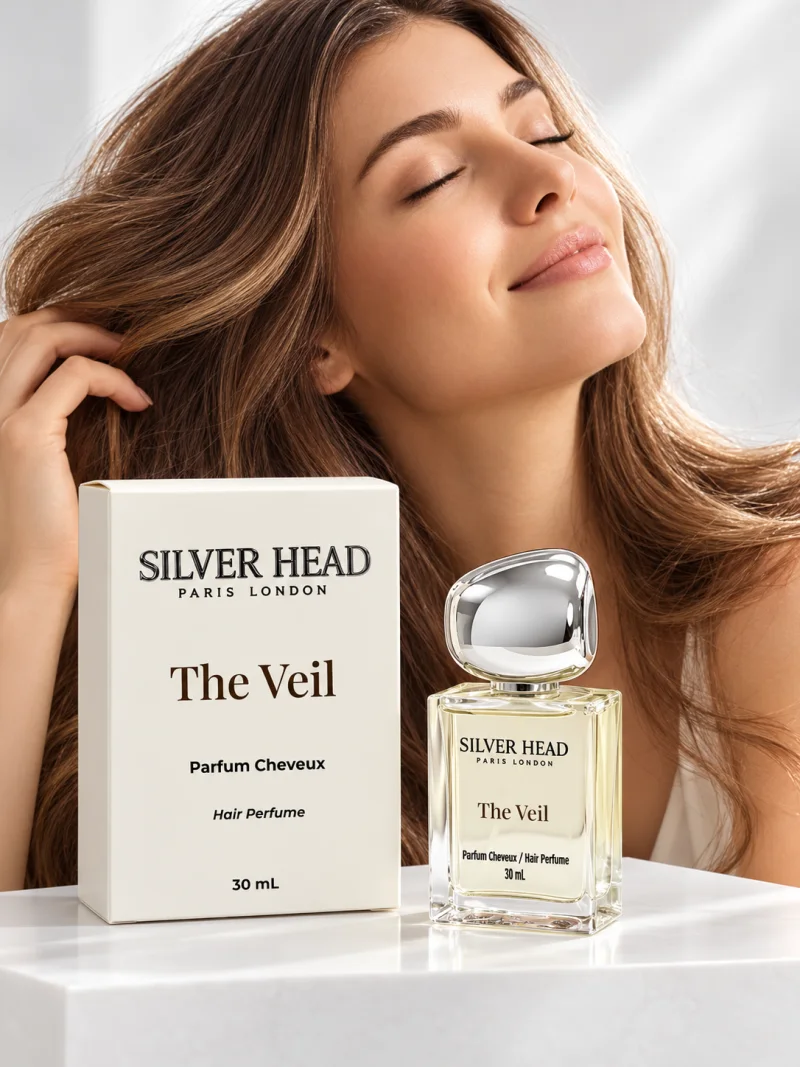
What Is Hair Perfume, What Does It Do? Ingredients and Difference
Other names: hair mist, hair fragrance mist
Hair perfume is a light, leave-in spray made to give hair a pleasant scent. Its formula highlights water, alcohol and fragrance ingredients, and care additives such as glycerin or panthenol may also be present. Tell it apart from regular perfume by the ingredient list, not by the name: do not assume it is alcohol-free, and do not treat it as a substitute for a care or heat protection step.
See products for youAt a glance
- Type
- Leave-in, scented hair spray
- Typical content
- Water, Alcohol Denat., Parfum, Polysorbate 20, Glycerin, Panthenol
- What it does
- Leaves a scent on the hair, does not clean dirt and oil
- Concept often confused
- Regular perfume, heat protectant and hair care spray
- Caution
- Avoid if you have a scent allergy, do not spray onto the scalp or face
What's on this page?
The idea behind hair perfume is simple: a strand can hold scent molecules for a while. In one lab study, the amount of fragrance raw materials remaining on hair varied with the chemistry of the raw material and with the degree of damage to the strand; moderately damaged hair held the most. That study was done with a shampoo formula. Independent data on how many hours a spray-applied hair perfume stays scented is hard to find, so be cautious with exact duration claims.
What is in hair perfume?
The formula varies by manufacturer, but the label usually shows substances that perform four roles.
| Role | Example on the label | Why is it there? |
|---|---|---|
| Carrier | Aqua, Alcohol Denat. | Spreads the scent over the hair; alcohol evaporates quickly and does not leave the hair wet |
| Scent | Names such as Parfum, Linalool, Limonene | This is the product's main job |
| Solubiliser | Polysorbate 20, Propylene Glycol | Keeps the oily scent molecules dispersed in the water-based mixture |
| Care additives | Glycerin, Panthenol, Polyquaternium-7, Caprylic/Capric Triglyceride | Added for a soft feel and easy combing |
The proportion of care additives is not stated on the label. So seeing these names in the list does not turn the product into a care step. Expect the actual care from a hair conditioner or mask.
What is the difference in ingredients from regular perfume?
- No classification. Perfumes have established classes based on scent intensity, but hair perfume has no equivalent. Words such as "light" or "intense" are the product's own description.
- Separate safety category. For scent substances, industry safety standards evaluate fine perfume and leave-on sprays applied to hair in different categories. Permitted amounts vary by category, so the same scent blend may not be usable at the same proportion in two products.
- Alcohol may be shared. Being made for hair does not mean it contains no alcohol or little of it. If you see Alcohol Denat. near the top, it occupies an important place in the formula.
- Additional substances may differ. In perfume, scent and carrier come first; in hair perfume, care additives are added to these.
Distance, number of sprays and where to spray are explained in the how to use hair perfume article. You can read what the word Parfum covers on a label in the Parfum (Fragrance) page.
Why is alcohol used, and how big a problem is it?
In a spray formula, alcohol does a practical job: it dissolves the scent substances, disperses as a fine mist, and evaporates without wetting and sticking the hair. Dermatology sources warn that alcohol-based hair products can dry the strand and make it brittle. But very few studies measure how much a typical amount of hair perfume affects the strand.
The honest summary: harm from a few occasional sprays has not been measured, while dryness with frequent, heavy use is a reasonable assumption. If your hair is dry, opened or curly, take that assumption more seriously. Since alcohol is flammable, keep the product away from fire and hot tools while the hair is still damp.
Water appearing before alcohol on the label shows the product is water-based, but it does not show that the alcohol is low. The order only describes descending amounts, not percentages. So in a list starting with "Aqua, Alcohol Denat.", alcohol may still be a large part of the formula.
Some hair perfumes may have a heat or hair protection phrase in their name. For these products the main job is still scent. If you expect heat protection, look on the label for supporting ingredients, a temperature statement and usage instructions; you can find the criteria on the heat protectant page.
Who is it suitable for, and who should be careful?
| Situation | Assessment |
|---|---|
| People who want a light scent on wash day or during the day | Does its job, but does not remove oil and residue from the hair |
| Dry, opened or curly hair | Check the position of alcohol on the list and keep the amount low |
| People with a scent allergy | Consult a dermatologist before use |
| Sensitive scalp, eczema, psoriasis | Do not apply to the scalp, do not use while an active rash is present |
| Asthma or breathing complaints caused by scent | Do not spray in a small closed space; if a complaint occurs, stop and ask your doctor |
| Pregnancy, breastfeeding, children | Consult a doctor first |
If you have reacted to scent substances before, reading labels helps. In the European Union, Regulation 2023/1545 raised the number of scent allergens that must be separately listed on the label above 80. The rule applies to new products in the EU from 31 July 2026, and to products already on the market from 31 July 2028. You may not see the same detail on every label sold in Turkey. You can read about who should keep their distance from scents and essential oils in the article perfume and essential oils in cosmetics.
Before spraying a new product on your hair, test it on the inner arm or elbow crease, twice a day, for 7-10 days. If redness, itching or blisters appear, do not use it.
This page is for general information only and does not replace medical diagnosis or treatment. If you have an ongoing skin or scalp problem, consult a dermatologist.