What Is a Hair Mask, What Does It Do? Ingredients and Limits
Other names: hair care mask
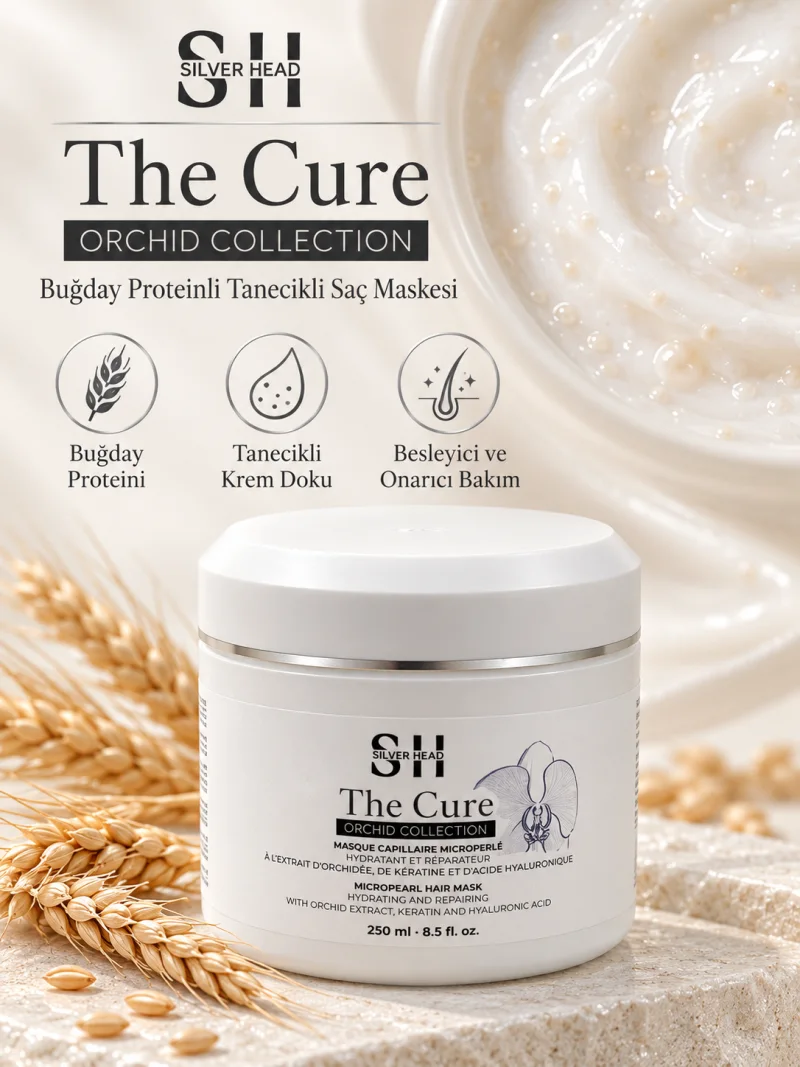
A hair mask is an intensive hair care product applied after shampoo, left on for a while, and rinsed off. At its core are cationic substances and fatty alcohols; most formulas also contain silicones, hydrolyzed protein or oils. It softens the strand, reduces friction and makes the surface look even, but it does not reverse damage, lengthen hair or stop hair loss.
See products for youAt a glance
- Type
- Intensive hair care product that is rinsed off
- Typical content
- Behentrimonium Chloride, Cetearyl Alcohol, silicones, hydrolyzed protein
- What it does
- Softens the strand, makes combing easier, makes the surface look even
- Suited to
- Dry, easily tangled, dyed or processed hair
- Caution
- If the label does not say so, do not leave it on the hair and do not rub it into the scalp
What's on this page?
"Hair mask" is a name chosen by the manufacturer. Its equivalent in dermatology literature is deep conditioning treatment: a care product more intense than an ordinary hair conditioner, used on very dry hair and before chemical processing. Being sold in a jar or being thick does not by itself prove this intensity. You can find the comparison of mask and conditioner in the hair conditioner and hair mask difference article. The key question here is what the mask actually does to the hair strand.
Can ingredient intensity be read from the label?
Partly. In cosmetics, ingredients are listed from most to least by quantity, but ingredients below 1% may be listed in any order. So you can look at the list with this in mind:
| Where on the list? | Common names | What does it mean? |
|---|---|---|
| Right after water | Cetearyl Alcohol, Cetyl Alcohol, Behentrimonium Chloride, Cetrimonium Chloride | The body, texture and slipperiness of the mask are here |
| Middle rows | Dimethicone, Amodimethicone, oils, Glycerin | Glide, shine and a soft feel |
| Last rows | Hydrolyzed Keratin, Hydrolyzed Silk, Panthenol, plant extracts | May be a small amount; the proportion cannot be read from the label |
There is also an upper limit on intensity. The European Union sets a limit of 2,5% for Cetrimonium Chloride and 5% for Behentrimonium Chloride in rinse-off hair products. This limit is the same for hair conditioner and mask, so the word "mask" does not mean the formula can contain unlimited care substances.
What does a mask do to the strand?
- Sticks according to charge. The hair surface is negatively charged, and this is more pronounced in damaged areas. Cationic substances, being positively charged, settle especially in these areas.
- Leaves a layer on the surface. Fatty alcohols, silicones and oils make the strand slippery and lay lifted scales flatter. Easier combing and a shiny look mostly come from here.
- Can carry small molecules inward. Small pieces of proteins such as hydrolyzed keratin and panthenol have been shown in the lab to move into the strand. Large pieces stay on the surface.
- Temporarily holds split ends together. Protein-containing products can keep ends neat for a while, but this effect lasts only until the next shampoo.
Do not miss one distinction in this list. The change outside the strand is noticeable right away and relates to home use. Findings about substances entering the strand mostly come from lab experiments in which hair is soaked in solution for hours. How much of this happens during a few minutes of mask use has not been measured separately.
What do masks rely on?
Words such as "repairing" or "nourishing" say very little about the formula. It is more informative to look at which group the weight of the list is given to.
| Main group | Example on the label | Expected on the hair | Who is it closer to? |
|---|---|---|---|
| Cationic substance, fatty alcohol | Behentrimonium Chloride, Cetearyl Alcohol | Slipperiness, easy combing | Most hair, in small amounts on fine hair |
| Protein | Hydrolyzed Keratin, Hydrolyzed Silk | Layer on the surface, temporary holding of split ends | Dyed, processed hair |
| Oil | Argania Spinosa Kernel Oil, Cocos Nucifera Oil | Soft feel; reduced protein loss with some oils | Thick, dry hair |
| Silicone | Dimethicone, Amodimethicone | Thin film, glossy look | Long, easily tangled hair |
| Humectant | Glycerin, Panthenol, Sodium Hyaluronate | Soft feel | Dry hair, not enough on its own |
What a mask cannot do
| Claim | Reality |
|---|---|
| "Repairs damaged hair" | Makes the appearance and combing easier; does not rebuild broken bonds |
| "Seals split ends" | Temporarily holds them together; the lasting solution is cutting the ends |
| "Feeds the hair" | A hair strand is not living tissue and is not nourished. Hair is formed in the follicle |
| "Stops hair loss" | A mask acts on the hair shaft that has emerged, not on the follicle |
| "Makes hair grow longer" | It may help keep length by reducing breakage, but it does not change the growth rate |
| "Permanent result" | The effect fades with washing; repeated use is needed |
Many household products sold under the name hair botox are in fact masks. You can read what the name promises, and how it differs from the salon treatment, in the hair botox page.
Which hair really needs a mask?
- Dry, rough, easily tangled hair: If hair conditioner is not enough, a mask may be a meaningful addition.
- Dyed, processed or frequently heat-styled hair: Because the surface is more worn, care substances attach to the strand more.
- Fine, quickly greasy hair: A mask is not essential. If you use one, use it only on the ends and sparingly.
- Healthy hair: Hair conditioner is most likely sufficient. There is no obligation to add a mask.
Contact time, application area and frequency are explained in the how to use a hair mask article. If itching, redness, or a rash on the face and neck appears after a mask, stop using it; if it persists, see a dermatologist. Protein-containing hair products can, rarely, cause hives, particularly in people with atopic dermatitis.
This page is for general information only and does not replace medical diagnosis or treatment. If you have an ongoing skin or scalp problem, consult a dermatologist.